
学习笔记说明
这是一篇Python的学习笔记,关于Python 中间件,仅做记录
核心概念
- 横切关注点(Cross-Cutting Concerns):描述了跨越多个功能、可被横切的共同逻辑的现象
- AOP(Aspect Oriented Programming):应该将那些跨域多个功能、可被横切的共同逻辑分离出去,不侵入功能本身
- DI:AOP的一种实现手段
理解中间件
FastAPI的中间件是AOP的一种实现手段
async def my_middleware(request: Request, call_next):
  	# 操作...
    response = await call_next(request) # 传递给下一个中间件
    # 操作...
    return xxx

app.middleware("http")(my_middleware)
1
2
3
4
5
6
7
2
3
4
5
6
7
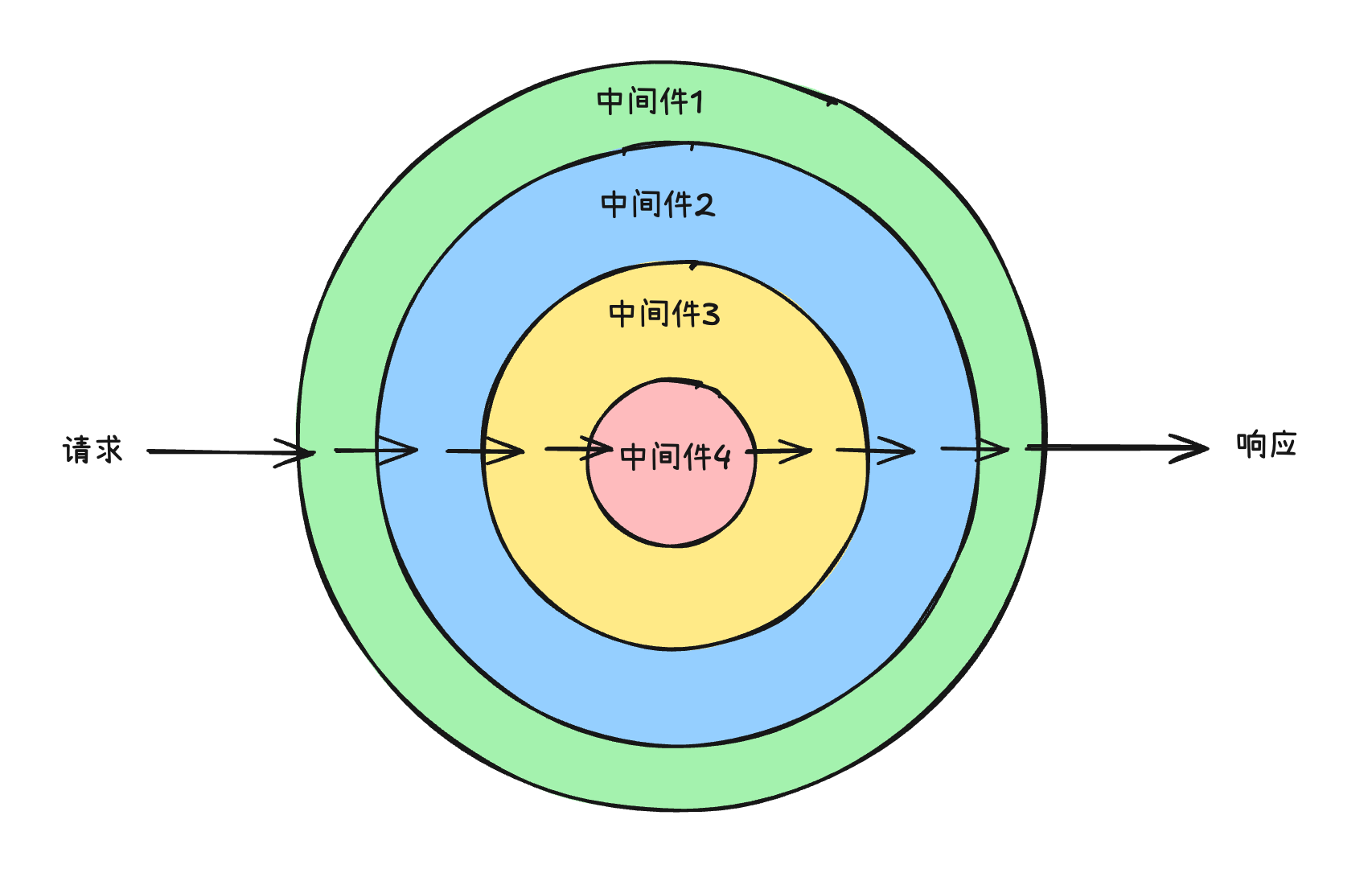
统一响应格式中间件
apps/web-service/app/core/middleware/response.py
import json

from fastapi import Request
from fastapi.responses import JSONResponse

async def unified_response(request: Request, call_next):
    response = await call_next(request)

    if not request.url.path.startswith("/api/"):
        return response

    body = b""
    async for chunk in response.body_iterator:
        body += chunk

    headers = dict(response.headers)
    headers.pop("content-length", None)

    if response.status_code >= 400:
        err = json.loads(body) if body else {}
        return JSONResponse(
            content={
                "code": err.get("code", str(response.status_code)),
                "data": None,
                "message": err.get("message", ""),
            },
            status_code=response.status_code,
            headers=headers,
        )

    data = json.loads(body) if body else None

    return JSONResponse(
        content={"code": "0", "data": data, "message": "success"},
        status_code=response.status_code,
        headers=headers,
    )

MIDDLEWARE = (unified_response, {})
1
2
3
4
5
6
7
8
9
10
11
12
13
14
15
16
17
18
19
20
21
22
23
24
25
26
27
28
29
30
31
32
33
34
35
36
37
38
39
2
3
4
5
6
7
8
9
10
11
12
13
14
15
16
17
18
19
20
21
22
23
24
25
26
27
28
29
30
31
32
33
34
35
36
37
38
39
apps/web-service/app/core/middleware/__init__.py
import inspect

from fastapi import FastAPI

from app.core.middleware import response

MIDDLEWARES = [
    response.MIDDLEWARE
]

def register_middleware(app: FastAPI) -> None:
    for callable_obj, kwargs in MIDDLEWARES:
        if inspect.isclass(callable_obj):
            app.add_middleware(callable_obj, **kwargs)
        else:
            app.middleware("http")(callable_obj)
1
2
3
4
5
6
7
8
9
10
11
12
13
14
15
16
2
3
4
5
6
7
8
9
10
11
12
13
14
15
16
apps/web-service/app/main.py
from app.core.middleware import register_middleware

register_middleware(app)
1
2
3
2
3
apps/web-service/app/core/openapi.py
from fastapi import FastAPI

def _build_envelope_properties(data_schema: dict) -> dict:
    return {
        "code": {
            "type": "string",
            "description": "状态码,0 表示成功",
            "example": "0",
        },
        "data": data_schema,
        "message": {
            "type": "string",
            "description": "提示信息",
            "example": "success",
        },
    }

def _make_envelope(data_schema: dict) -> dict:
    return {
        "type": "object",
        "properties": _build_envelope_properties(data_schema),
        "required": ["code", "data", "message"],
    }

def _wrap_ref_schema(openapi_schema: dict, schema: dict) -> dict:
    ref_path: str = schema["$ref"]
    ref_name = ref_path.split("/")[-1]

    title = ref_name.replace("_", " ")
    wrapper_name = f"ApiResponse_{ref_name}"

    schemas = openapi_schema.setdefault("components", {}).setdefault("schemas", {})
    if wrapper_name not in schemas:
        schemas[wrapper_name] = {
            "title": f"ApiResponse[{title}]",
            "type": "object",
            "properties": _build_envelope_properties(schema),
            "required": ["code", "data", "message"],
        }

    return {"$ref": f"#/components/schemas/{wrapper_name}"}

def _wrap_array_schema(openapi_schema: dict, schema: dict) -> dict:
    items = schema.get("items")
    if isinstance(items, dict) and "$ref" in items:
        item_name = items["$ref"].split("/")[-1]
        title = f"List[{item_name.replace('_', ' ')}]"
        wrapper_name = f"ApiResponse_List_{item_name}"

        schemas = openapi_schema.setdefault("components", {}).setdefault("schemas", {})
        if wrapper_name not in schemas:
            schemas[wrapper_name] = {
                "title": f"ApiResponse[{title}]",
                "type": "object",
                "properties": _build_envelope_properties(schema),
                "required": ["code", "data", "message"],
            }

        return {"$ref": f"#/components/schemas/{wrapper_name}"}

    return _make_envelope(schema)

def setup_openapi(app: FastAPI) -> None:
    _original = app.openapi

    def _custom():
        if app.openapi_schema:
            return app.openapi_schema

        schema = _original()

        for path, path_item in schema.get("paths", {}).items():
            if not path.startswith("/api/"):
                continue

            for method in ("get", "post", "put", "delete", "patch"):
                operation = path_item.get(method)
                if operation is None:
                    continue

                responses = operation.get("responses", {})
                for status_code_str, response in list(responses.items()):
                    status_code = int(status_code_str)
                    if status_code not in (200, 201):
                        del responses[status_code_str]
                        continue

                    content = response.get("content", {})
                    json_content = content.get("application/json")
                    if json_content is None:
                        continue

                    original_schema = json_content.get("schema")
                    if original_schema is None:
                        continue

                    if "$ref" in original_schema:
                        wrapped = _wrap_ref_schema(schema, original_schema)
                    elif original_schema.get("type") == "array":
                        wrapped = _wrap_array_schema(schema, original_schema)
                    else:
                        wrapped = _make_envelope(original_schema)

                    json_content["schema"] = wrapped

        app.openapi_schema = schema
        return schema

    app.openapi = _custom
1
2
3
4
5
6
7
8
9
10
11
12
13
14
15
16
17
18
19
20
21
22
23
24
25
26
27
28
29
30
31
32
33
34
35
36
37
38
39
40
41
42
43
44
45
46
47
48
49
50
51
52
53
54
55
56
57
58
59
60
61
62
63
64
65
66
67
68
69
70
71
72
73
74
75
76
77
78
79
80
81
82
83
84
85
86
87
88
89
90
91
92
93
94
95
96
97
98
99
100
101
102
103
104
105
106
107
108
109
apps/web-service/app/main.py
from app.core.openapi import setup_openapi

setup_openapi(app)
1
2
3
2
3
用于性能调试的中间件
apps/web-service/app/core/middleware/process_time.py
import time

from fastapi import Request

async def process_time(request: Request, call_next):
    start = time.perf_counter()
    response = await call_next(request)
    response.headers["X-Process-Time"] = str(round(time.perf_counter() - start, 4))
    return response

MIDDLEWARE = (process_time, {})
1
2
3
4
5
6
7
8
9
10
11
2
3
4
5
6
7
8
9
10
11
用于解决跨域的中间件
.env.example / .env
# 其他配置
WEB_CORS_ORIGINS=* # 跨域白名单,多个来源用逗号分隔,* 表示允许所有
WEB_CORS_EXPOSE_HEADERS=X-Process-Time # 允许前端读取的响应头,多个用逗号分隔

# 其他配置
1
2
3
4
5
2
3
4
5
apps/web-service/app/core/config.py
class _WebSettings(_BaseSettingsWithEnv):
    app_name: str = "Web Service API"  # 实际读取 WEB_APP_NAME
    cors_origins: str = ""  # 实际读取 WEB_CORS_ORIGINS,多个来源用逗号分隔
    cors_expose_headers: str = ""  # 实际读取 WEB_CORS_EXPOSE_HEADERS

    # 配置读取方式
    model_config = {"env_prefix": "WEB_"}
1
2
3
4
5
6
7
2
3
4
5
6
7
apps/web-service/app/core/middleware/cors.py
from starlette.middleware.cors import CORSMiddleware

from app.core.config import web_settings

origins = [o.strip() for o in web_settings.cors_origins.split(",") if o.strip()]
expose_headers = [
    h.strip() for h in web_settings.cors_expose_headers.split(",") if h.strip()
]

MIDDLEWARE = (
    CORSMiddleware,
    {
        "allow_origins": origins,
        "allow_credentials": True,
        "allow_methods": ["*"],
        "allow_headers": ["*"],
        "expose_headers": expose_headers,
    },
)
1
2
3
4
5
6
7
8
9
10
11
12
13
14
15
16
17
18
19
2
3
4
5
6
7
8
9
10
11
12
13
14
15
16
17
18
19